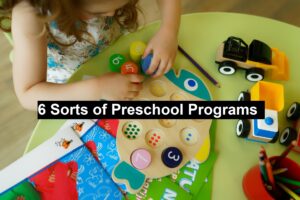
6 Sorts of Preschool Programs
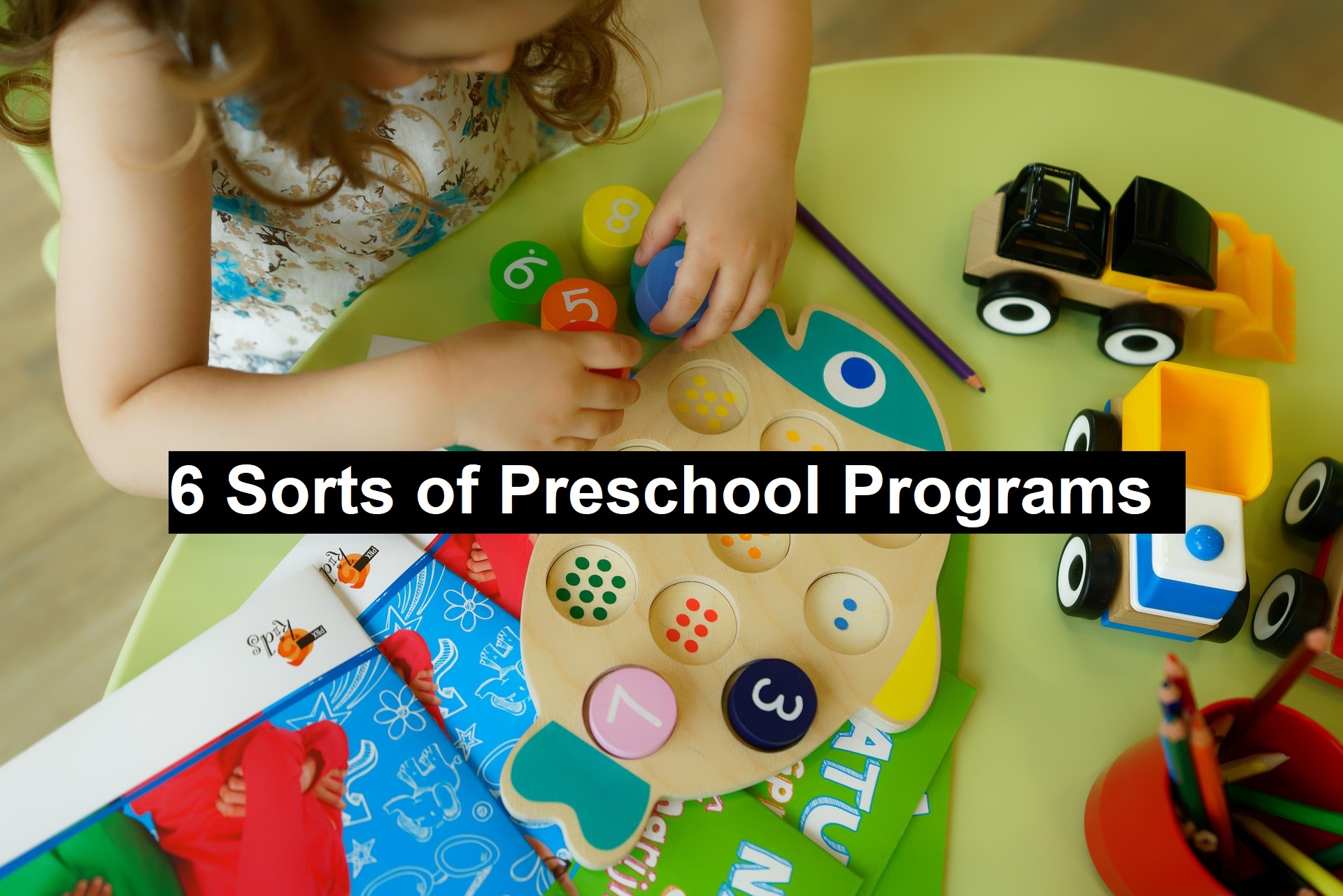
Geared for children between 3 and 5 a long time ancient, preschool programs can offer assistance construct your child’s scholastic status, offer assistance them learn imperative social abilities, move forward cognitive advancement, and get ready your child for school. But given all the accessible programs, how do you select the best one for your small one’s identity and learning style?
For starters, it’s accommodating to know that preschool programs tend to drop into two wide categories in the Joined together States: play and discovery-based learning or more scholastically organized, says Linda Whitehead, bad habit president of instruction and improvement for Shinning Horizons.
“The to begin with reasoning is learning through revelation, which incorporates programs with a center on child-directed exercises,” she clarifies. “Instructors serve as guides and arrange exercises based on children’s formative levels. The moment logic centers on programs that are more scholastically based, and ordinarily incorporate penetrate and hone components.”
Whether you select a discovery-focused or academic-based program is up to your individual inclination, as well as your child’s person needs, age, vitality level, and development. It might moreover depend on the length of the program you need (full day or half day). To make the choice simpler, check out our direct to six prevalent preschool methods of insight and programs.
And keep in intellect, in spite of the fact that our list is numbered, it’s not a list that reflects that one is way better than another; each program has its claim contemplations for diverse children.
1. Montessori
Developed by doctor and teacher Maria Montessori, this comprehensive preschool program takes a formative approach to learning. All instructors must have a Montessori certification. The educational modules emphasizes nature, inventiveness, Montessori materials, and hands-on learning with tender direction given by the instructors. Children center on exercises that adjust with their interface, which creates freedom and common curiosity.
Overall, the objective of the Montessori strategy is to create a child’s faculties, character, down to earth life abilities, and scholastic capacity. “On the off chance that your child is acclimated to a more thorough plan or guided learning, this may not be the right fit,” says Hilary Levey Friedman, Ph.D., child rearing master and creator of Playing to Win: Raising Children in a Competitive Culture. Numerous Montessori programs proceed past preschool into the juvenile stage.
2. Waldorf
This preschool program is based on the lessons of Austrian essayist Rudolf Steiner, and it endeavors to sustain a child’s soul, soul, body, and interface. The Waldorf program includes inventive, hands-on bunch learning with a center on musical redundancy in a strong environment. In fact, the detailing of day by day and week by week schedules, as well as the cozy environment of the classroom, make a “home-like” environment for the students.
The Waldorf program looks for to create a solid internal eagerness for learning and create children’s natural capacities and abilities. It’s particularly valuable for preschoolers who flourish with set plans. Instruction is teacher-directed, and each educator must be Waldorf certified.
3. Reggio Emilia
Reggio Emilia schools shaped in Italy in the 1940s; Loris Malaguzzi is credited with directing the vision for this approach and organize of schools in Italy, and numerous worldwide preschool programs grasp this open-ended and child-led reasoning today.
With an accentuation on investigation, the program centers on the significance of community and self-expression. Understudies learn through craftsmanship, ventures, and exercises that reflect their thoughts and interface. There’s too an accentuation on collaborative and agreeable classroom exercises and the approach considers the child’s environment their “third teacher.”
Teachers do not total any formal Reggio Emilia preparing or credentialing. That’s since Reggio Emilia is an overarching instructive hypothesis and hone, or maybe than a set strategy. Teachers consider the students’ mental, passionate, and imaginative potential when empowering their self-guided learning.
4. HighScope
The HighScope Preschool Educational modules employments a carefully outlined approach called dynamic participatory learning. Children have hands-on encounters with their environment, which cultivates the advancement of problem-solving strategies, conflict-resolution strategies, and other vital aptitudes. Learning is upheld through reliable every day schedules and well-organized classrooms.
High Scope takes an scholastic incline with arranged encounters in the fundamental subjects of math, perusing, and science. It’s based on past and current child improvement investigate. The spine of the preschool program is “plan-do-review”—children arrange out how to total a certain venture, work to reach their objective, and analyze the comes about afterward.
5. Bank Street
Lucy Sprague Mitchell is credited with making this formative approach, and instructive rationalist John Dewey was a solid impact. The approach centers on a child’s mental, social, enthusiastic, and physical development. In these preschool programs, the child is an dynamic learner and picks up information approximately the world through involvement. Understudies set the learning pace, and the educator serves as a guide.
Comparable to play-based learning, the Bank Road approach instructs lessons through hands-on exercises like building pieces, perplexes, clay, and emotional play. Preschoolers frequently work in a non-competitive bunch environment.
6. Co-Ops
If you need to be specifically included with your child’s school encounter, consider a agreeable preschool, where guardians and caregivers can work closely with the classroom instructors. In a few settings, the guardians included can indeed select a educator to contract or interchange on a more homeschool capacity by turning a lead volunteer instructor. Guardians and caregivers might offer assistance with lessons, watch classroom behavior, and share in the commerce operation by serving on the school’s board of chiefs.