A Toy Rotation System is a Parenting Hack that Actually Works!
I remember reading this tip in a parenting magazine a few years ago and laughing at the very idea of it. My friend told me she had been hiding her son’s toys in the garage and suddenly the kid stopped being so fussy about what he played with. As a parent I just knew that having fewer toys would mean unhappy children!
It wasn’t until later that I discovered how brilliant this ‘toy rotation’ really is (and I’m not alone as this method is increasingly popular with both parents and child development experts). If your kids are the type to empty every toy box in the house, play with every single thing for about ninety seconds then declare that they have nothing to do, then a rotation system is just what the doctor ordered!
What is Toy Rotation?
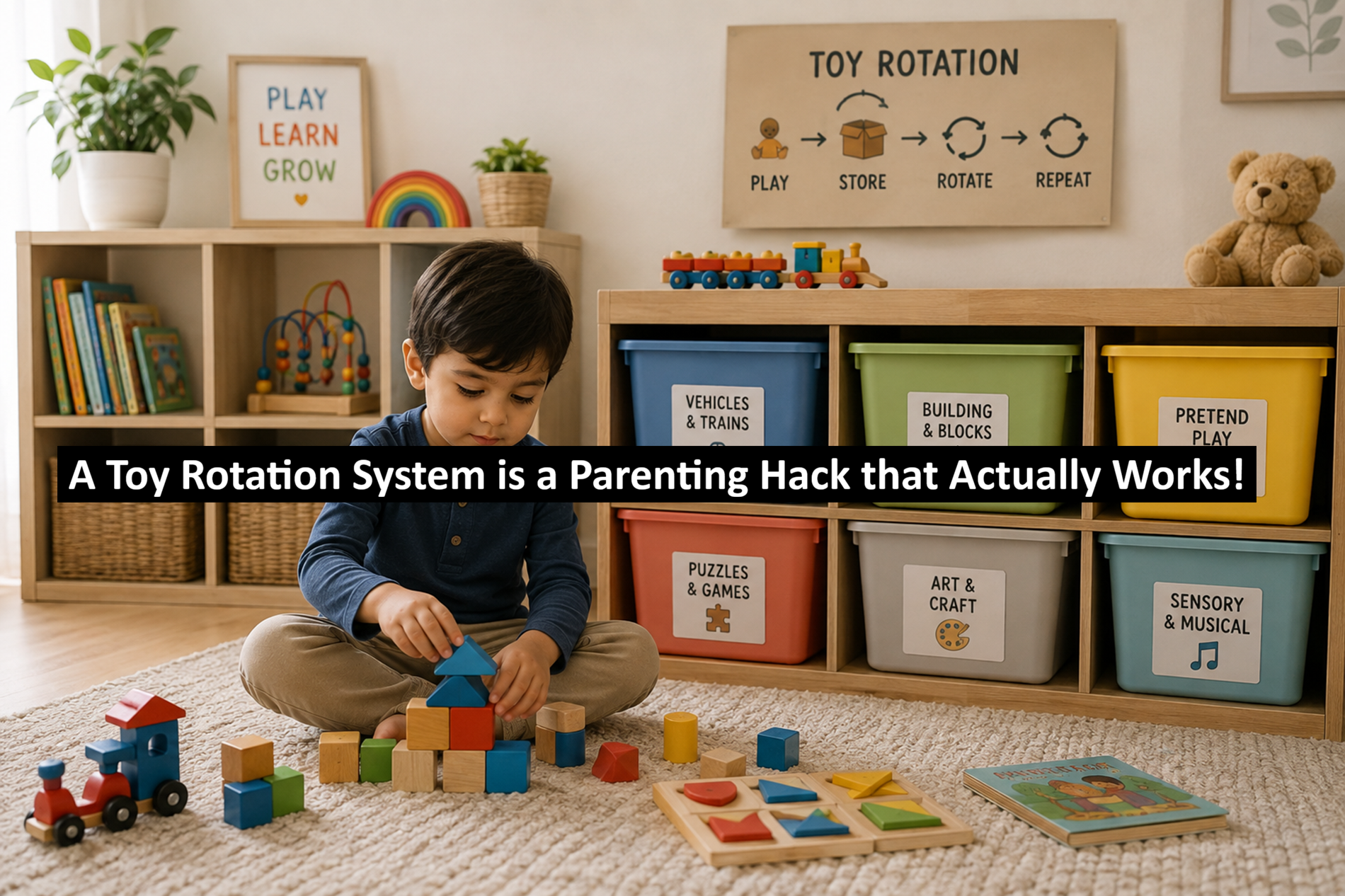
Toy rotation is actually very simple. Instead of having all toys permanently out and available for play, only a small selection are made available at any given time. Every couple of weeks the available toys are rotated out for another set. The toys that have been put away are then rotated back in when the next rotation takes place.
Read: A Year of Stories: Personalized Book Activities for Every Season
What are the benefits of a toy rotation system?
Fewer toys out at one time means less sensory stimulation for little ones.
Children’s attention span is short and they can get easily distracted. This means that if you have several toys out at one time they won’t be able to focus on just one.
Having fewer toys out means that children can explore and interact with the toys more fully because their attention isn’t being ‘stolen’ by other objects nearby.
Parents also notice that toy rotation decreases tantrums and frustration as they simply don’t have too many toys to choose from. Most parents find that as a result of implementing a rotation system, their children are spending less time whining and more time exploring!
How do I set up a toy rotation system?
Getting started is easy!
First off sort your toys into groups.
Take everything your children own and sort it into groups of roughly equal size. Try to spread out the types of toys in each group. For example if you have blocks, dolls, cars, art supplies, puzzles, etc try to split them into separate piles. Then keep one pile out and put the others away. The pile that’s kept out will be your children’s available toys. It’s a good idea to put the other piles somewhere out of sight (like a closet or garage). If possible have your children help you do this.
Once you’ve rotated your toys, try to keep the toys that are out for about a week or two before putting them away and getting the next pile ready. Again, try to involve your children as much as possible!
It’s also important to realize that not all toys should be rotated! Some toys should always be available to children. Toys like books, a comforter, arts and crafts supplies and toys that are specifically for outside activity should always be available. You can decide for yourself what you mean by ‘always’, perhaps you have story time every evening, or your toddler only uses her favorite stuffed animal to fall asleep with.
Who is toy rotation best suited for?
Toy rotation works best with toddlers and preschoolers (ages one to five). Toddlers are easily overwhelmed by too many toys, and they thrive on the novelty of new toys. That said, toy rotation can be successfully used by older children. Kids this age love board games, puzzles and other types of toys that can be rotated out every now and then. School age children tend to get a lot more toys, and toy rotation is a great way to avoid clutter!
Babies under one year old don’t generally need a rotation system, as most babies at this age can’t yet explore toys fully anyway. A general rule of thumb is that the fewer toys are out at once, the better.
What if my child asks for a toy that’s been put away?
That’s fine, if your child asks for a toy that’s been rotated away there’s no harm in giving it to them just this once. The goal is to reduce the amount of overwhelming stimuli around your child. Toy rotation is a rough guideline, not a strict rule book.
What are some of the most common mistakes?
Toy rotation is incredibly simple, but there are a few common mistakes that negate any benefits.
The most common mistake is rotating toys too soon after a rotation. It’s best to wait at least a week or two before rotating toys again.
Another mistake is treating every toy the same. Some more involved toys, like big building sets or a pretend play set should be kept out for longer. Simpler toys can be rotated more often.
Finally, some parents find they need to hide their toys to avoid the endless questions about when the next rotation is due. A rotation system should be simple; a labeled bin in your closet is sufficient. Making the rotation system unnecessarily complicated defeats the point entirely.
Why toy rotation is a great choice for parents.
Toy rotation is a great way to free up your children’s attention span. Most parents who try this find that their children are much happier overall with fewer toys to deal with. It should also be noted that once a rotation system is in place parents often report a significant decrease in complaining by their children over the course of a week. If your playroom looks more like a retail store display, it’s time to clear some space!
Author’s Bio:
Bilal Khan likes to write about toys, parenting and the in between. In addition to writing, I work at Baith Al Athfal as part of the toys and baby products team.